

June 20, 2026
Dear Saints,
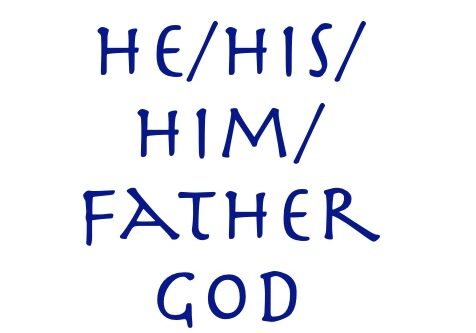
With Father’s Day being tomorrow during this annually manipulated month of June (remembering the rainbow is the Lord’s chosen covenant sign for saving His people from a self-centered world), let us be proud to come out of our Christian closets obeying the Fifth Commandment that ultimately relates to God and insist on honoring His right to self-identify as male and Father.
Recently attending a diversified educational ministry environment, I observed one person ordained in a Christian context recounting a visit with a homosexual man and his husband who proclaimed, “God is definitely female.” The person sharing—whose own spouse with whom birth children are shared identifies as non-binary,1 affirmed it is an appropriate option to address God in prayer as “she.” Even a recommended book for the group only refers to God as “she” with no explanation.
At that moment, one cleric representing a different religion while claiming ownership of the Hebrew Scriptures expressed hatred toward using any pronouns for God—male or female. Another spiritual caregiver also representing Christianity joined in the angst against a perceived and unwarranted imposition by others of male pronouns for God. And the church of one of the group’s leaders (a married homosexual) was said to forbid the use of gender pronouns for God in worship.
Frankly, the moment was pregnant with hypocrisy (or as one of my daughters has said, a classic double-standard). These same ministers who often insinuated that all people must be respected for how they self-identify as nonsexual or other than God’s biological gender choice for them at their birth, were yet adamantly forcing upon God whatever gender specific pronouns they prefer while rejecting how He clearly self-identifies in His own self revelation (the Bible).
But when we read the Scriptures (written by the Holy Spirit per 2 Peter 1:21), God is always referred to as He/Him/His both in the Hebrew and the Greek. So the only honest Bible translation will reflect and respect that and His own identification as Self. So Virgil Walker wrote in his recent article, “The Bible Is a Masculine Book”:
God Reveals Himself as Father and King
Source: Virgil Walker, “The Bible is a Masculine Book”2
… He is Father. He is Lord and King. Scripture never softens those titles, and the people who try are not editing the Bible. They are replacing it.
This is not stereotype mapped onto deity. It is revelation. God has chosen masculine terms to disclose Himself because those terms convey what is true of Him: strength under authority, faithfulness that holds across generations. Strip the masculine vocabulary, and you do not correct God. You manufacture a different one.
What I bold below is representing masculine pronouns in the Hebrew or Greek (there are available feminine pronouns for she/her/hers, but they are never used for God in the Bible).3
Old Testament Examples:
Exodus 15:3: The LORD is a man of war: the LORD is his name. It is significant that this is Moses’ song (reflected in Revelation 15) about God Who had just delivered His people from the Egyptians through the Red Sea, which frankly has implications regarding military service and who ought to protect whom.
Deuteronomy 7:9: Know therefore that the LORD thy God, he is God, the faithful God, which keepeth covenant and mercy with them that love him and keep his commandments to a thousand generations;
Deuteronomy 10:12: And now, Israel, what doth the LORD thy God require of thee, but to fear the LORD thy God, to walk in all his ways, and to love him, and to serve the LORD thy God with all thy heart and with all thy soul,
Deuteronomy 1:31: And in the wilderness, where thou hast seen how that the LORD thy God bare thee, as a man doth bear his son, in all the way that ye went, until ye came into this place. The idea of having strength to bear someone trekking through the dessert for an extended period of time connected with manhood also is in view with Isaiah 40:11: He shall feed his flock like a shepherd: he shall gather the lambs with his arm, and carry them in his bosom, and shall gently lead those that are with young. So often fathers are called upon by mothers to take over carrying their children on hikes for the long haul unto the finish.
And in Isaiah 9:6 we hear in the prophecy of Christ, the Son of God, Himself, For unto us a child is born, unto us a son is given: and the government shall be upon his shoulder: and his name shall be called Wonderful, Counsellor, The mighty God, The everlasting Father, The Prince of Peace.
Further, Psalm 103:13 reassures God’s children with, Like as a father pitieth his children, so the LORD pitieth them that fear him.
New Testament Examples:
In Matthew 6, Jesus speaks of “Your Heavenly Father” and teaches us to pray to “Our Father” in heaven. The pastoral benefit here for us is emphasized in the Westminster Shorter Catechism (WSC) Q&A 100, explaining, “The preface of the Lord’s prayer (which is, Our Father which art in heaven) teacheth us to draw near to God with all holy reverence and confidence, as children to a father, able and ready to help us; and that we should pray with and for others.”
This idea also relates to WSC Q&A 34 which we studied recently: “Adoption is an act of God’s free grace, whereby we are received into the number, and have a right to all the privileges, of the sons of God.” (See my earlier devotion on this topic here: puritanchurch.com/behold-what-love-the-blessed-doctrine-of-adoption). And this doctrine of adoption derives its meaning from such verses as Romans 8:15: For ye have not received the spirit of bondage again to fear; but ye have received the Spirit of adoption, whereby we cry, Abba [Daddy], Father.
Such examples inform how we are not only to pray but sing to God as proclaimed in Psalm 68:4-5: Sing unto God, sing praises to his name: extol him that rideth upon the heavens by his name JAH, and rejoice before him. A father of the fatherless, and a judge of the widows, is God in his holy habitation. Notice that “Jah” is a short form of “Jehovah” or “Yahweh,” God’s special covenant name (see my article here: placefortruth.org/yhwh-i-am).
In his book, All the Divine Names and Titles in the Bible, Herbert Lockyer notes that “Father” is the distinguishing title for God in the New Testament occurring alone or along with other titles about 300 times and “expressing a peculiar relationship founded on and accomplished by redemption.”4 He also tallies “the Father” used 44 times in the Gospel of Matthew, five times in Mark, 17 times in Luke, and 122 times in John.5
Among many examples given by Lockyer are these highlights about God. He is,
- The Father of mercies (2 Corinthians 1:3);
- The Father of spirits (Hebrews 12:9 quoting Proverbs 3 comparing and contrasting God to earthly fathers);
- The Father of glory (Ephesians 1:17);
- The Father Who seeks true spiritual worshippers (John 4:21-24).
Lockyer also points out that while Jesus spoke often of God, He only once named Him as such (Matthew 27:56 quoting Psalm 22:1). “Otherwise, He directly addresses Him as Father — the single, filial term speaking of the most intimate relationship existing between the Father and the Son. ‘The name Father,’ says Wescott, ‘is indeed the sum of Christian revelation.’”6 He further points out that “Father” was among Jesus’ first words in Luke 2:49 and within His last prayer in Luke 23:46.7 Indeed, “Of all the divine names there is none more full of comfort or more touching to the heart than that of the one before us.”8
As John is especially replete with Jesus calling the Lord His Father (by nature) and our Father (by adoption), let us review just a few:
John 3:35: The Father loveth the Son, and hath given all things into his hand.
John 5:17: But Jesus answered them, My Father worketh hitherto, and I work.
John 14:6: Jesus saith unto him, I am the way, the truth, and the life: no man cometh unto the Father, but by me.
John 20:17: Jesus saith unto her, Touch me not; for I am not yet ascended to my Father: but go to my brethren, and say unto them, I ascend unto my Father, and your Father; and to my God, and your God.
So Paul exclaims in Ephesians 1:3: Blessed be the God and Father of our Lord Jesus Christ, who hath blessed us with all spiritual blessings in heavenly places in Christ:
And in James 1:17 it is celebrated, Every good gift and every perfect gift is from above, and cometh down from the Father of lights, with whom is no variableness, neither shadow of turning.
Now, of course, God said that He created man as male and female both in His own image (Genesis 1:27); but this is regarding being rational and communicating as truly righteous and holy (Ephesians 4:24; Colossians 3:10). As well, technically we know that God is a spirit and does not have a body like men (John 4:24).
There are admittedly a few examples of highlighting God’s care for His people with a generally feminine characteristic such as nursing mothers (Isaiah 49:15 and 66:13)—just like the apostle Paul said he and others ministered as nurses cherishing children under their care (1 Timothy 2:7). And you might recall during my sermon series on the names of God that one of them has a feminine feel derived from “El” (Strength): “Elah” or “Eloah,” with the sermon point being “Adore Your Lord.” But these are all figurative comparisons to communicate nuanced ideas—and few and far between the robust majority of masculine pronouns, names, and expressions about God with His own purpose for providing and preserving our identity in Him with Christ.
Effeminate exegesis that refuses to respect God’s clear self-revelation as male and Father throughout the Scriptures ultimately espouses another Gospel whose proselytizers Paul says should be anathema and emasculated.
Reflecting a recurring Old Testament phrase, Paul also says in 1 Corinthians 16:13 to “quit you like men,” which in the Greek is one word that literally translates “act like a man” and connotes “be brave.” The Portuguese and Spanish equivalent, “Varonilmente,” also is one word and means “manfully, manly,” or “courageously.” For ministers claiming to represent the God of the Scriptures, speaking of or to God in any other way is the epitome of feministically imposed eisegesis upon His own clearly chosen identity as He Who is the God and Father of our Lord Jesus Christ and to turn people away from Him.
Semper Reformanda,
Pastor Grant
PS: You may have interest to revisit a sermon I preached on a prior Father’s Day, “Fatherhood is Foundational (God Says He Will be the Christian’s Father).” It was based on 2 Corinthians 6:18, where God says to His people in Christ that He will be a Father unto you, and ye shall be my sons and daughters, saith the Lord Almighty.
Footnotes:
- See my other article, https://reformation21.org/blood-cries-binary, as well as placefortruth.org/bruce-jenner-transvestism-and-republicans-there-is-nothing-to-party-about. ↩︎
- Virgil Walker, “The Bible is a Masculine Book”: virgilwalker.substack.com/p/the-bible-is-a-masculine-book-ffe?utm_source=substack&utm_medium=email&utm_content=share ↩︎
- Let alone, “they/them/their.” While one may object to this statement in favor of plural pronouns for God with the use of the Hebrew “Elohim” for “God,” that would either be a dishonest or naieve misrepresenting of its regularly understood collective singular along with the Great Shama in Deuteronomy 6:4-5 (though in context it could make allusion to the Trinity such as in Genesis 1:26). ↩︎
- Herbert Lockyer, All the Divine Names and Titles in the Bible (Grand Rapids: Zondervan, 1975), 65. ↩︎
- Ibid, 66. ↩︎
- Ibid, 68. ↩︎
- Ibid, 68. ↩︎
- Ibid, 66. ↩︎