

September 8, 2026
Dear Saints,
I often enjoy listening to Christian radio while driving. But one day near the end of last week–in-between my chaplain appointments, I was disappointed to hear the direction of a host’s question getting the desired answer from a well-known Reformed pastor who is now with the Lord regarding the phrase “sabbath days” in Paul’s letter to the Colossians. It was heartily interpreted as undoubtedly removing the requirement of a weekly Sabbath Day rest and worship for New Testament Christians.
The verses that were wrongly explained are Colossians 2:16-17, which read: Let no man therefore judge you in meat, or in drink, or in respect of an holyday, or of the new moon, or of the sabbath days: Which are a shadow of things to come; but the body is of Christ.
I’d like to review two things I have offered to correct this mistaken interpretation from a footnote in our Inquirer/Membership class through the Westminster Confession of Faith on chapter 21, “On Religious Worship and the Sabbath Day.” It referred to paragraph 7:
As it is the law of nature, that, in general, a due proportion of time be set apart for the worship of God; so, in His Word, by a positive, moral, and perpetual commandment, binding all men, in all ages, He hath particularly appointed one day in seven, for a Sabbath, to be kept holy unto Him:(k) which, from the beginning of the world to the resurrection of Christ, was the last day of the week; and, from the resurrection of Christ, was changed into the first day of the week,(l) which, in Scripture, is called the Lord’s Day,(m) and is to be continued to the end of the world, as the Christian Sabbath.(n) (Westminster Confession of Faith 21:7, Emphasis, GVL.) (k)Exod. 20:8, 10-11; Isa. 56:2, 4, 6-7. (l)Gen. 2:2-3; 1 Cor. 16:1-2; Acts 20:7. (m)Rev. 1:10. (n)Exod. 20:8, 10 with Matt. 5:17-18.
So first off, notice our Westminster Standards instruct the opposite of what that renowned pastor taught from Colossians. Here is what I shared in my class lecture notes that explains why:
“Chad Van Dixhoorn’s clarification of ‘Sabbaths’ and ‘Sabbath’ is helpful with what Paul says about ‘sabbath days’ (‘sabbaths’ in Greek), which does not refer to the Decalogue’s Sabbath, a perpetually binding creation and moral norm for God’s people at all times: ‘The first type of Sabbath in Scripture was special, almost always beginning a special festive time and almost always on the first day of the week or the first day of a feast. These days were often referred to in the plural, as they are in Paul’s letter to the Colossians (Col. 2:16): they are often collectively called “Sabbaths.” Leviticus 23 is one of the passages in Scripture which mentions the special “first day Sabbaths” and the feasts which they inaugurated … The first-day Sabbaths were special, but the high point of all these … was declared the grand Sabbath, the year of Jubilee … The second type of Sabbath was a last-day Sabbath, the weekly Sabbath … usually referred to in the singular, and is called “the Sabbath.”’ Van Dixhoorn, 290, 291. See PRPC’s sermon on Leviticus 23 to further bear out that the Sabbath Day is distinguished from typological sabbaths.”1
Chad Van Dixhoorn, Confessing the Faith: A reader’s guide to the Westminster Confession of Faith
What I referenced at the end of the above quote is what I’d like to link to here (for review listening if interested to drill down on the details), my sermon on Leviticus 23, “Keep Christ’s Weekly Holy Day and Feast (Sabbath Continuation, Typology of Holy Days)”: sermonaudio.com/sermons/327161717591.
Within this sermon, I explained the following:
In verse 3, the regular foundation of time is the weekly Sabbath (it is not ceremonial but a creation ordinance, see WCF 19:3) and so it is ongoing. The Sabbath Day is attached to creation as a foundation for all time with an appeal to God’s own example to follow in Ex. 20:8-11. This needs to be the main governing guidance in the discussion.
In verse 4, here the temporary feasts are distinguished from the perpetual Sabbath Day, as in vss. 37-38. Holy Feasts forbid only “servile work”. The Sabbath Day and Day of Atonement forbade “all manner of work” (vss. 3, 31). And feasts were especially attached to animal sacrifices (and thus were types, unlike the perpetual Sabbath of the Ten Commandments).
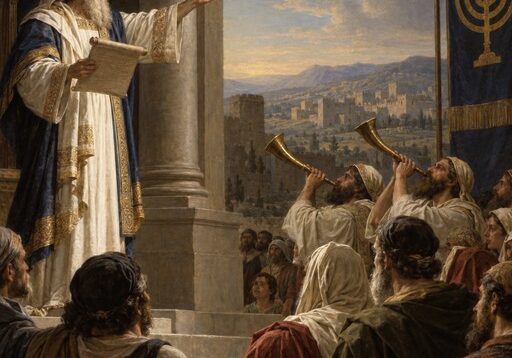
Leviticus 23:24 is important to highlight: Speak unto the children of Israel, saying, In the seventh month, in the first day of the month, shall ye have a sabbath, a memorial of blowing of trumpets, an holy convocation. Note that this sabbath day is the first day of the seventh month (so it is distinct from the weekly Sabbath Day in the Decalogue). This is clearly a different kind of Sabbath Day than what is commanded as a weekly ritual in the Ten Commandments, and its different kind among annual festive sabbath days on certain months is what is actually in view.
This explains Colossians 2:16-17, which is referring not to the weekly Sabbath Day (one in seven from the Ten Commandments) but to these annual festival “sabbath days/holy days” on certain months connected to some new moons that are now expired with the nation of Israel. They pointed to and are fulfilled in Christ. There are now no new holy seasons or days commanded today (heed 1 Kg. 12:33 as well as our “Westminster Directory for the Publick Worship of God” which declares there are no annual holy days for us now with NT worship but only the weekly Sabbath Day).2
The Sabbath Day most assuredly remains and weekly proclaims of Christ, “He is risen!” Hebrews 4:3-9 teaches: For we which have believed do enter into rest … For he spake in a certain place of the seventh day on this wise, And God did rest the seventh day from all his works. And in this place again, If they shall enter into my rest. Seeing therefore it remaineth that some must enter therein … There remaineth therefore a rest to the people of God. The Lord’s Day, the Christian Sabbath, remains now moved to the first day of the week to recognize and celebrate Jesus’ rising from the dead and looking forward to the final resurrection (Rev. 1:10; Acts 20:7; 1 Cor. 16:1-2).
The Sabbath Day continues as the Holy Day for God’s holy people to gather for holy worship. It is one of the Ten Commandments and based in creation with God’s own example (Exodus 20:11) and a sign we are no longer slaves to this world (Deut. 5:15). There are no more holy season feasts. However, there is now for every Lord’s Day the Lord’s Supper (adjusted from the Passover by Christ in the Upper Room; Mt. 26:17ff).
The “sabbath days” and all their attended ceremonial seasonal feasts and sacrificial offerings are fulfilled in Christ and so the shadows fade away in the coming of the Light of the World: … an holyday … the new moon … the sabbath days: Which are a shadow of things to come; but the body is of Christ. All the feasts are communicated in His Supper which is now had weekly, not annually, on the continued Sabbath Day with their meaning maintained in the weekly Lord’s Day and Lord’s Supper:
Exodus 23:14-19 of Three main festivals:
- Passover and the Festival Of Unleavened Bread: vs. 15 (Ex. 12-13; Lev. 23:4-8). To remember being rescued from Egypt. Christ is our Savior from this world and now “our Passover” (1 Cor. 5:7.)
- Festival of Weeks/Pentecost, “Fifty Days”. First fruits of beginning of harvest: vs. 16 (Lev. 23:15-16). These typified (and thus are fulfilled by) Christ’s ascension and the spread of the NT Church by the Holy Ghost (Acts 2:1ff).
- Festival of Ingathering/Tabernacles. The first fruits of the final harvest in fall: vs. 16 (Lev. 23:33-36). John 1:14 in the Greek literally says Jesus “tabernacled” among us. In Rev. 21:3ff, the Tabernacle of God will be with men, who are the tabernacle. Jesus is “Emmanuel” (Mt. 1:23/Isa. 7:14). We are to live as if in booths as pilgrims just passing through this world to the eternal Promised Land. Andrew Bonar explains with great insight that this is how to understand Peter at the Mt. of Transfiguration in Mark 9:5 when he says, let’s make three “tabernacles”.3 He saw heavenly fellowship with Jesus, God incarnate, fulfilled such OT types.
Rest of Lev. 23:
- Feast of First Fruits of Promised Land (vss. 9-14). Christ is our first fruits of our resurrection into heaven, 1 Cor. 15:20, 23.
- First Fruits of Wheat Harvest (vss. 17-21). Jesus is the Bread of Life and Manna from Heaven.
- Feast of Trumpets, vss. 23-25. Christ is now sounding the seven trumpets of these Last Days (Rev. 8:2ff). Mt. 24:31; 1 Cor. 15:52; 1 Thess. 4:16: Christ will return at the sound of a great trumpet to gather us.
- Day of Atonement (Lev. 16; 23:26-32). Jesus is the true, final High Priest (Heb. 4-10).
This is all gloriously simplified in the summary of the weekly Christian Sabbath and Lord’s Supper. May we continue to rest in, worship, and partake of Christ each Christian Sabbath recognizing that not only are we still obliged to, but that we are so blessed to be summoned to participate in and taste of the fullness of what we will enjoy with our eternal rest at the great supper of the Lamb!
Semper Reformanda,
Pastor Grant
PS: here’s a Pastor’s Post I wrote a while ago about how to prepare for the Lord’s Day and Lord’s Supper: puritanchurch.com/proper-preparation-for-the-lords-day-and-supper.
Footnotes:
- Chad Van Dixhoorn, Confessing the Faith: A reader’s guide to the Westmisnter Confessino of Faith (East Peoria, Ill.: The Banner of Truth Trust, 2014), 290-291. ↩︎
- “AN APPENDIX, Touching Days and Places for Publick Worship. THERE is no day commanded in scripture to be kept holy under the gospel but the Lord’s day, which is the Christian Sabbath. Festival days, vulgarly called Holy-days, having no warrant in the word of God, are not to be continued.” Visit thewestminsterstandard.org/directory-for-the-publick-worship-of-god/#16. ↩︎
- Andrew Bonar, A Commentary on the Book of Leviticus (Grand Rapids: Baker Book House, 1978), 412. ↩︎
Categories: Articles